Monday 13 July 2026



Your induction of labour has been booked in for:
_____________________________________
Please call the Beatrice Maternity ward on 01722 425184 at 13:00 to confirm the timing of your admission.
If we are able to invite you in sooner then we will call you.
Please note, your induction is booked into a 48-hour period, and we aim to commence your induction within this timeframe. If we are unable to invite you in straight away, we will call you from a private number during both the daytime and night-time as soon as we can, so please leave your phone on loud. Please let us know if you only wish to be called in the daytime, however this may delay your induction. We will aim to invite you in as soon as possible. If we are not able to invite you in straight away we encourage you to try to remain as relaxed as possible and to continue your everyday activities.
If you have any concerns at any point within those 48 hours, including any reduced movements, then please contact us on 01722 425185 and we can provide advice over the phone and invite you in to be seen if required.
What is induction of labour?
In order for a baby to be born through the vagina, the cervix (the neck of your womb) changes from being closed, long and hard (a similar consistency to the tip of your nose), to being thin, soft and starting to open (dilate). Hormones called prostaglandins help these changes happen. When this change happens, your body releases another hormone called oxytocin which leads to stronger contractions (the tightening and relaxing of the muscles in your womb) which gradually open your cervix further. In most pregnancies this starts naturally between 37-42 weeks of pregnancy and is referred to as ‘spontaneous labour’.
Induction of labour is a process that tries to start labour artificially, either by mechanical methods, using medication, or sometimes both. On average, labour is induced in approximately 1 in 3 pregnancies (33%) and our local rates at Salisbury are similar.
What are the chances that I will labour myself spontaneously if I am not induced?
Labour usually spontaneously starts naturally before 42 weeks of pregnancy, based on the due date calculated by your scan. A doctor or a midwife will offer some women an induction of labour if you and/or your baby are at an increased risk of complications if you were to continue your pregnancy and await spontaneous labour.
|
Number of weeks pregnant |
Proportion of |
Cumulative proportion of spontaneous labours that started by this stage |
|
31 weeks and under |
2.4% |
2.4% |
|
32+0 to 36+6 weeks |
5.3% |
7.7% |
|
37+0 to 37+6 weeks |
5.1% |
12.8% |
|
38+0 to 38+6 weeks |
12.1% |
24.9% |
|
39 to 39+6 weeks |
25.4% |
50.3% |
|
40+0 to 40+6 weeks |
32.5% |
82.8% |
|
41+0 to 41+6 weeks |
16.2% |
99% |
|
42 weeks and over |
1% |
100% |
Why am I being offered an induction of labour?
An induction of labour is recommended in circumstances when it appears the benefits outweigh the risks for the mother and/or baby of continuing the pregnancy, but with the aim of still enabling a vaginal birth. There are many different reasons that women are offered an induction of labour, and the benefits of it will be individual for each woman. Your individual needs and preferences are a priority. Any decision made with regards to offering to induce your labour will be made with you and your doctor or midwife. They will discuss your individual circumstances with you including why induction of labour is being recommended.
If an induction of labour is offered, you will have the opportunity to make informed decisions about your care and treatment including the opportunity to decline an induction of labour. We encourage you to ask questions if there is anything you are unsure about. The health professionals can advise you of their recommendations based on evidence available, but ultimately only you will decide whether to go ahead or not. If you choose not to be induced you will be offered the opportunity to discuss an alternative plan with your pregnancy doctor (obstetrician) and your decision will always be respected. This leaflet covers both national guidance and local statistics from Salisbury.
Whilst making your decision about induction of labour, you may find it helpful to use the BRAIN tool below to help you during your discussion with the doctor or midwife.
Benefits – what are the benefits of induction for me and my baby?
……………………………………………………………………………
Risks/repercussions – what are the risks and possible unintended consequences of an induction?
…………………………………………………………………………………………………….
Alternatives – what are the alternative options available?
…………………………………………………………………
Intuition – how do I feel? What is my gut instinct telling me?
……………………………………………………………………
Nothing – what if I decide to do nothing for now and wait and see? What happens next?
……………………………………………………………………………………………………..
Further information about the reasons for induction and the research is available at the end of this leaflet.
What happens before an induction of labour?
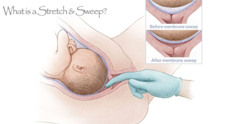
From 39 weeks, you may be offered a membrane sweep with a community midwife or in the antenatal clinic. A membrane sweep may increase the chances of you going into spontaneous labour yourself. A membrane sweep involves a midwife or doctor performing an internal vaginal examination with the aim of reaching your cervix, placing their finger into the cervix (if it is dilated) and making a circular, sweeping motion to separate the membranes that surround the baby, or massaging the cervix. The person performing the examination will complete a Bishop’s Score assessment of your cervix (a score of whether your cervix is already preparing for labour). The findings will be discussed with you. If you are booked for an induction of labour prior to 39 weeks, then your doctor may discuss offering a membrane sweep prior to 39 weeks.
A membrane sweep may cause some discomfort or pain, if at any stage you would like the examination stopped then please tell the person performing it. You may experience some cramping and/or discharge including a mucousy blood-stained show following the examination. If you experience any fresh bleeding after the examination, then please call maternity triage on 01722 425185.
If your first membrane sweep does not lead to labour starting on its own, then we will discuss with you if would like to have additional membrane sweeping. These should be performed at least 48 hours apart and no more than twice per week. Membrane sweeps do not cause any harm to your baby and there is no evidence that it increases the chance of you or your baby getting an infection. There is a very small risk that the membranes are accidentally ruptured during the examination, in which the infection risk goes up from approximately 0.5% to 1%. Membrane sweeping is not recommended if your membranes (bag of waters) have already broken.
Any decision to decline a membrane sweep will be fully respected.
What happens during an induction?
Induction of labour happens in a staged approach as it needs to happen gradually. The steps include:
The stages required for an induction are individual and depend on how ready your cervix is for your labour. Some women may require all three steps, other women may only need one or two steps as their cervix is already ripened, or they may spontaneously labour following one of the steps.
Admission to the maternity unit
Your doctor or midwife will talk to you about your options for where this first step can take place. This will usually be on Beatrice Maternity Ward, however it may be on the labour ward depending on the reason for your induction. If a previous vaginal examination prior to admission confirms that your cervix is ready for labour and does not require any cervical preparation, then you will be admitted straight to the labour ward. Once you are admitted for your induction we advise that you remain in hospital until your baby is born as we do not currently facilitate outpatient inductions.
There may be delays in the induction of labour process as we need to ensure safety in terms of staff availability and bed capacity before proceeding at each step of the induction process. If there is a high level of activity across the maternity unit or pressure on bed capacity, we may delay starting your induction until it is safe to do so, which is why we book you in for a 48 hour period.
On arrival, you will be orientated to the ward area and offered refreshments. Please note that you may be admitted to a four bedded bay area for the start of your induction. The midwife will discuss and recommend:
Step 1: Preparing Your Cervix
The first choice method for preparing your cervix is mechanically with the use of
Dilapan-S®.
MECHANICAL:
Mechanical methods of induction aim to dilate your cervix, but may not always soften or thin it.
Dilapan-S® 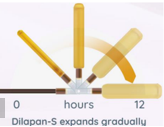
Dilapan-S® are thin small hydrogel dilators which are inserted into the cervical canal either through a speculum (an instrument to visualise the cervix as used in smear tests) to guide the midwife or doctor, or they may insert them with their fingers. Up to five rods may be inserted, and they absorb moisture from the cervix, expand and stretch the cervix, and may promote the release of your own prostaglandins which may naturally soften and thin your cervix. Each dilator is slightly larger than a matchstick. Depending on how dilated your cervix is, the process may involve adding one or two dilators to start with and then inserting more once the cervix opens further. They can remain in for 24 hours, but are usually left in for 12-15 hours. They are then removed during a vaginal examination. The dilators contain no medicine or drugs, the focus is on expanding your cervix without medication.
HORMONAL:
Prostaglandin medication is administered into the vagina which help soften, thin and dilate the cervix. Hormonal methods will only be recommended to you if a senior obstetrician advises you that the benefits outweigh the risks (see next page for benefits and risks).
Prostin® Gel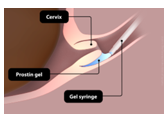
Prostin® is a low dose prostaglandin gel which is released into the vagina by a midwife or doctor using a slim plastic applicator (the applicator will be removed). It can be given every 6 hours, and is typically given once or twice, depending on how ready for labour your cervix is.
Propess® 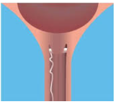
Propess® is a vaginal pessary which continually releases low doses of hormone to prepare the cervix. It looks like a small strip of panty liner and is inserted by a midwife or doctor in the same way as a tampon without an applicator. It is attached to a length of tape which can be felt at the opening of the vagina for easy removal and is intended to remain in place for 24 hours.
What method for step 1 will be recommended for me?
There are benefits and risks for both the hormonal and mechanical methods:
|
|
Advantages |
Disadvantages |
|
Hormonal |
|
|
|
Mechanical |
|
|
The methods used to prepare your cervix will take into account your history, reason for
induction as well as your preferences, as some methods are not recommended for some women. The first line method recommended at Salisbury is mechanical induction (with Dilapan-S®.) due to the increased risk to your baby(ies) from too many contractions.
When you have completed step 1, or if you are ready to have your waters broken before you come into hospital, we aim to transfer/admit you to the labour ward as soon as is safely possible. Delays in transfer/admission do happen and when they do, we will try to keep you informed of the reason for the delay.
Sometimes your waters break, or established labour starts earlier during the induction process. This might mean that you are ready to go to the labour ward before the ‘end’ of step 1 of the induction (for women who are on Beatrice Maternity Ward). You may also require an earlier transfer to labour ward for additional pain relief beyond that available on the ward or because of concerns for you or your baby’s wellbeing.
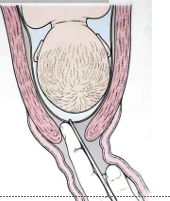
Step 2: Breaking Your Waters (Artificial Rupture of Membranes – ARM)
An artificial rupture of membranes takes place on the labour ward. Being admitted to the labour ward can only occur when there is both a room and a midwife available to look after you. The order in which women are admitted to the labour ward is based on an assessment of the woman’s whole clinical background and prioritisation of safety rather than just the length of time since admission.
It is impossible to predict how long delays may be due to the labour ward being a high activity area
accepting women who come in directly from home in spontaneous labour or with other conditions. Whilst every effort to minimise delays are taken, when they do happen we always aim to keep you fully informed, whilst continuing to monitor you and your baby’s wellbeing.
Once on the labour ward, the midwife will monitor your baby’s heart rate continuously with a CTG machine for at least 20 minutes and then a doctor or midwife will perform a vaginal examination and use a sterile plastic instrument to make a small hole in the membranes around your baby. There is a small risk of scratching your baby’s head during this procedure, particularly if the membranes are tight around your baby’s head. The person performing the procedure will do everything they can to reduce the risk of this happening.
Following the breaking of your waters, the midwife will note the colour of the waters and continue to monitor your baby on the CTG machine for 20-30 minutes. The colour of your waters should be clear or straw-coloured. If you notice any blood or green (this is likely to be meconium – baby’s first poo) then please let the midwife know straight away.
After your monitoring, the midwife will discuss the options with you:
Step 3: Hormone Drip
Oxytocin is a hormone naturally produced in your body and helps your womb to contract and open your cervix. The hormone drip is a synthetic oxytocin which is given through a drip into a vein in your arm or hand.
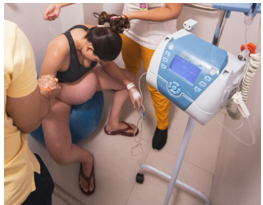
Whilst you are on the drip, we strongly advise that your baby’s heart rate is monitored continuously on the CTG machine. This may be able to be done wirelessly so that you can move around more easily and change position if you wish. Some movements or positions can interrupt the recording of your baby’s heartbeat so we will work with you to maintain safe mobility. If we are unable to monitor baby’s heartbeat sufficiently, we will discuss with you position changes, or a attaching a fetal scalp electrode to your baby’s head. This is a wire inserted into the vagina with an electrode which is gently clipped into baby’s scalp with a lead that that runs into the CTG machine. This may leave a small scar which usually heals well and will be covered by your baby’s hair as it grows.
The CTG machine will also record how often you are having contractions. The midwife will adjust the amount of oxytocin that you receive in order for your body to experience contractions 3-4 times in a 10 minute period, mimicking natural labour.
Everyone responds differently to the drip. For some women a small amount is needed to begin having contractions, whilst others need much higher doses. A small amount is given to start with and increased every 30 minutes as required to achieve a safe and effective rate of contractions. Therefore, the time taken from starting the drip to having regular contractions will vary and may take several hours.
Sometimes too many contractions can occur which can affect your baby’s heart rate (hyperstimulation), which is why continuous CTG monitoring is advised. If this happens you may be asked to change your position (usually to lie on your left side) to improve the blood flow to the placenta, and the rate of the drip may be reduced or temporarily stopped. If the midwife has any concerns about your baby’s heartbeat in labour then she will discuss this with a doctor. Whilst you are on continuous CTG monitoring we recommend that a second person comes into your room
at least once an hour as a second checker (‘fresh eyes’) of your CTG monitoring.
What are the risks/repercussions of induction of labour?
Induction is a medical intervention that can affect your birth options and your experiences of the birth process. These include:
For women whose labour was induced, 1.7% of women had a caesarean birth because their cervix did not dilate enough to be able to break their waters (a 98.3% success rate in being able to break the woman’s waters in order to continue the induction in Salisbury in 2023).
For women who have had a previous caesarean, there is a slight increased risk of a uterine rupture (a tear in your womb, usually where your scar is from your previous caesarean) when you are induced compared to going into spontaneous labour.
|
Statistics from Salisbury Maternity Unit in 2023 |
Spontaneous Labour |
Induction of labour |
|
There is an increased chance of having a caesarean or assisted birth (with forceps or ventouse) if you are induced, unless you are being induced because you are over 41 weeks (in which induction reduces your chance of having a caesarean). It is not known whether the increase in caesarean and assisted birth rate is due to being induced, or the reason for being induced. |
||
|
There is an increased chance of significant heavy bleeding after birth (also known as a massive postpartum haemorrhage). These rates are lower than women who have an planned caesarean, which has a significant heavy bleeding rate of 5.56%. |
1.6% |
3.8% |
|
Induction is generally perceived to be more painful than spontaneous labour and more women choose an epidural for pain relief. |
15.9% |
40.7% |
|
There is a slightly increased chance of sustaining a third or fourth degree tear (a tear that affects the muscle of the back passage) also known as an obstetric anal sphincter injury (OASI). |
2.4% |
2.6% |
What are the alternative options available?
The alternatives to an induction of labour are:
· Planned caesarean birth – this type of birth involves an operation to deliver your baby through a cut in your tummy. Planned caesareans are normally scheduled in the 39th week of pregnancy. An induction has been recommended to you because the benefits and risks outweigh the risks of a caesarean. Caesarean births have their own risks, and in the event that you would like to discuss a planned caesarean, you will be referred to one of our obstetric doctors and/or our midwife in the positive birth service clinic to discuss this.
What does my intuition tell me?
Midwives and doctors have a professional duty to recommend evidenced based care; to treat women as individuals and work in collaboration with you. Our role includes listening to your individual preferences, to have an informed discussion regarding the care pathway that has been recommended to you, and to agree a plan of care needs based on your own personal wishes, bearing in mind a risk assessment of your medical, social, psychological and obstetric needs. Together the best available evidence will be reviewed in conjunction with current local and national recommended guidelines.
We appreciate that there is a lot of information to process when an induction of labour is being recommended. Your feelings are very valid, and we encourage you to talk to a midwife or doctor about your preferences and how you are feeling.
What if I decide to do nothing for now and wait and see? What happens next?
For women who decide that they do not wish to be induced, and to continue with expectant management (awaiting your body to go into labour spontaneously), we will develop a personalised care plan with you during your appointment.
For women who are declining an induction from 41 weeks at their community midwife appointment, who are otherwise low-risk, your midwife will recommend an appointment with an obstetric doctor prior to 42 weeks
to discuss your preferences for what happens next.
The doctor will discuss further monitoring available for women who decide to decline an induction. This could include the option and frequency of CTG monitoring and growth scans including an assessment of the volume of fluid around your baby, both of which are used to assess the wellbeing of your baby. Current evidence tells us that further monitoring only provides a snapshot of the current situation and cannot predict reliably any changes after monitoring ends. This means that adverse effects (including stillbirth), and when these events might happen, cannot be predicted reliably or prevented even with monitoring.
We will always provide the opportunity to discuss your decision again at each subsequent appointment, if you wish to do so.
We would encourage you to contact maternity triage on 01722 425185 if you change your mind before your next appointment, or immediately if you have any concerns about yourself or your baby, including reduced
movements or a change in the pattern of movements from your baby.
OTHER FREQUENTLY ASKED QUESTIONS
What type of monitoring will be recommended for my baby during the induction?
During the initial part of the induction when your cervix is being prepared for labour, you will be recommended to have a CTG recording completed of baby’s heartrate every 6 hours as a minimum. Some women will be recommended to have monitoring more frequently depending on their history. If you have any concerns about yours or your baby’s wellbeing then please let the midwife know.
Once you are in active labour on the labour ward, the frequency and type of monitoring will depend on the reason for your induction and whether an oxytocin drip is required. Your midwife will complete a risk assessment which she will discuss with you to establish whether intermittent monitoring (listening to the baby’s heartbeat with a doppler intermittently) or continuous CTG monitoring is recommended. Continuous CTG monitoring is strongly recommended for any woman having an oxytocin infusion, regardless of the reason for induction. We will support you to be as upright and mobile as possible.
What are my pain relief options?
Women often describe induction of labour as being more painful than a labour that starts naturally. You will be offered support and whatever pain relief is appropriate for you. Pain relief options will depend on the stage of induction/labour, your preferences and your medical history. Please discuss your options with your midwife. You can also find helpful information at https://www.labourpains.org/
Most women do not experience any discomfort until labour begins, but some women do experience strong contractions, which can be painful. Having these contractions is normal and it is an effect of the hormone in the Propess pessary. Unfortunately, it does not always mean you are in labour. Please ask for pain relief when you need it.
Please also talk to your midwife if you need any pain relief during your vaginal examinations.
Can I use the birth centre if I am induced?
If the reason for your induction is that you are overdue (and under 42 weeks) or because you are 40 years or older and you go into labour yourself following step 1 and/or step 2 of the induction process (and step 3—the hormone drip is not required) then you may be suitable to birth in our birth centre. If you are induced for other reasons or the hormone drip is required then the birth centre is not suitable for your birth due to the increased monitoring that is recommended.
Can I use the birthing pool if I am induced?
We have two birthing pools available on the labour ward (providing they are not in use). We have CTG monitors which are waterproof and wireless, which can be used in the pool, but the continuous monitoring of baby is not always effective in this situation. If you are induced (including if you are having the oxytocin drip) and wish to use the pool, we can complete a risk assessment and discuss this as an option with you. If we are not able to monitor your baby’s heartrate effectively in the pool or if there are any concerns with your baby’s heartrate then the midwife will recommend that you transfer out of the pool. Depending on your history, the midwife may advise labouring in the pool but transferring out of the pool for the birth.
Can I eat and drink during induction and labour?
It is important that you maintain your strength during induction of labour but large meals are not advised. Frequent, high carbohydrate, low fat meals and drinks are recommended. You will be provided with breakfast, lunch and dinner as well as water, tea and coffee while you are staying in hospital. If you feel nauseous (feel sick) you should try to sip fluids. Water is fine but non-fizzy isotonic drinks (such as Lucozade Sport) are a good source of carbohydrates. Once you are in labour, you will be advised not to eat big meals but to have small, frequent snacks and will be given antacids (small oral tablets) to reduce the amount of acid in your stomach. There may be times that we advise clear fluids only when you are in active labour.
What are the visiting hours for my birthing support partners during induction?
We support one birthing partner to be with you during the initial part of the induction process. Once you are in active established labour, we support two birthing partners to be with you.
One birthing partner can stay with you overnight throughout the induction process and after the birth. We will ask that a behaviour agreement is read and signed by anyone staying with you overnight on the Beatrice Maternity Ward either before or following the birth.
Other friends and family are welcome on the Beatrice Maternity Ward following birth between 15:00-19:00 with a maximum of 3 visitors (including birth partner) at the bedside. Please note that no children may visit other than the mother’s own. Fresh flowers are unfortunately not permitted on the ward due to infection control guidance.
What should I bring into hospital with me?
Please also bring your hospital bag with you when you come. If you’d like specific snacks or drinks, (such as isotonic ones) please bring them. An induction can be a long process and you may be in for several days. Please do make sure you bring plenty of things to help keep you occupied and comfortable such as cards, games, headphones and music. You can also bring an electronic device to watch programmes/films on and take advantage of our hospital WiFi.
How does parking work?
There is a limited number of patient parking spaces available in entrance A (maternity). There is a larger patient car park in car park 8 at the back of the hospital.
Parking will be charged for and is not capped at 24 hours. There are pay machines in the maternity car park, the main entrance and in car park 8. You can pay for your parking at the end of your parking episode by cash, card or contactless on your phone at the machines. No change is given from the machines.
Blue Badge holders are exempt from car parking charges when parked in one of the designated Blue Badge bays located around the site.
If no Blue Badge bays are available, you are permitted to park in Car Park 8 (main visitor and patient car park) free of charge. Whether you park in a Blue Badge bay or car park 8, you MUST display your Blue Badge clearly on the dashboard of your vehicle.
People on certain benefits may qualify for discounted parking, please see our website for more
information.
If your baby is admitted to the neonatal unit, you will qualify for free parking.
REASONS INDUCTION IS RECOMMENDED
Pregnancy Lasting Longer Than 41 Weeks
Labour usually starts naturally before 42 weeks based on your estimated due date from your scan. Research has shown that some risks associated with pregnancy continuing after 41 weeks may increase over time including:
Induction of labour from 41 weeks may reduce these risks, but you also need to consider the impact of induction on your birthing experience.
Waters Breaking From 37 Weeks
If your waters break after 37 weeks (in the absence of labour) and you have no other risk factors, you will be offered the choice of:
Waiting for labour to start spontaneously for up to 24 hours
Induction of labour as soon as possible
Research suggests that 60% of women will go into labour within 24 hours. The risk of serious infection to your baby when your waters have not broken is approximately 0.5%. The risk of serious infection to your baby increases to 1% once your waters have broken, and this risk may increase over time.
If you are a carrier of GBS or your have any meconium in your waters, we will recommend an immediate induction to reduce the risk of infection to your baby.
For women who decline induction after 24 hours, we will develop a personalised care plan with you and discuss the option of having daily checks for the wellbeing of you and your baby. Once your waters have been broken for over 24 hours, we advise birth on our labour ward.
Waters Breaking Before 37 Weeks
If your waters break prior to 37 weeks (preterm and in the absence of labour) then a personalised care plan will be developed with you. An induction of labour will usually be recommended at around 37 weeks providing there is no evidence of infection or concerns with your baby’s wellbeing.
High Blood Pressure/Pre-Eclampsia
If you have high blood pressure that is treated prior to pregnancy, have developed high blood pressure in pregnancy (gestational hypertension) or have developed high blood pressure in pregnancy with protein in your urine (pre-eclampsia) then an induction of labour may be offered to you. An induction is usually offered from 37 weeks of pregnancy, but this may be sooner if your blood pressure is not stable or if there are concerns with the wellbeing of your baby. Induction is offered in order to reduce the risks of complications to yourself from high blood pressure as well as to reduce the risks to baby including issues with the placenta leading to growth concerns.
Suspected Large Baby
In the event that a growth scan at the end of your pregnancy shows that your baby is growing larger than expected, in the absence of diabetes, (usually over 97th centile line on your growth chart) an obstetrician will discuss the options of waiting for spontaneous labour, induction of labour between 38-40 weeks and the option of a planned caesarean birth.
Current evidence suggests that if birth is induced earlier than your due date, this can reduce the risk of a shoulder dystocia happening. A shoulder dystocia happens when a baby’s head has been born and one of their shoulders becomes stuck behind your pubic bone, delaying the birth of the baby’s body. Most babies born that have experienced a shoulder dystocia will have no long term complications. But for some babies, this can cause a stretching in the nerves of their neck, which may cause long-term weakness in their arm (brachial plexus injury also known as Erb’s palsy). A shoulder dystocia can also lead to oxygen deprivation in your baby during the birth. A shoulder dystocia occurs in 1 in 150 vaginal births; it does occur more often in bigger babies, but there is uncertainty as to how often this actually occurs. It is estimated that it occurs in 1 in 25 women with a big baby who have a vaginal birth. There is also evidence that there is an increased risk of experiencing a third or fourth degree tear.
A research trial is currently being undertaken which is looking at the outcomes of mums and babies where labour is induced at 38 weeks, compared to awaiting labour to start naturally. Current guidance advises that induction of labour can reduce the risk of shoulder dystocia compared to awaiting for natural labour to start, and it also reduces the risk of a third or fourth degree tear. Current evidence shows that the risk of death in babies and brachial plexus injury is the same between the two options.
Small Baby
Research shows that babies who are small but following their line on your growth chart, and babies who are not growing as expected, have an increased risk of stillbirth and have less reserves to cope in labour. Mothers of babies who are estimated to be between the 3rd and 9th centiles on your growth chart but who are following their curve, and have no other complications, will usually be offered an induction of labour at around 39 weeks. Although babies estimated to be between the 3rd-9th centile are growing appropriately, there is still an increased risk of stillbirth for smaller babies.
In the event that scans suggest that your baby is not growing as expected (under the 3rd centile or their growth is not following their expected centile line on your grow chart), an obstetrician will discuss their recommendations of timing of birth with you. The timing of this will depend on the results of your growth scan including the weight of baby and other measurements such as fluid levels and blood flow to your baby and the placenta.
Maternal Age of 40 or Above
For mothers who are 40 or above at their due date, the risk of stillbirth is increased compared to women who are under the age of 40. The reason for this increased risk is unknown, but research suggests this may be due to the placenta not working as well leading to growth problems in babies.
Stillbirth risks by age between 37-42 weeks of pregnancy (in absence of any baby medical problems or conditions):
|
Maternal Age |
37-38 weeks |
39-40 weeks |
41 weeks |
|
<35 years |
1 in 1887 (0.053%) |
1 in 1149 (0.087%) |
1 in 1449 (0.069%) |
|
35-39 years |
1 in 1493 (0.066%) |
1 in 806 (0.12%) |
1 in 952 (0.105%) |
|
40 years and above |
1 in 1064 (0.094%) |
1 in 667 (0.15%) |
1 in 463 (0.216%) |
The doctor looking after you in your pregnancy will discuss the option of an induction around your due date in order to reduce risk.
Diabetes/Gestational Diabetes
If you have type 1 or type 2 diabetes and no other complications then an induction of labour will be offered to you between 37 weeks and 38 weeks and 6 days’ of pregnancy.
If you have gestational diabetes and no other complications, then you will be offered an induction between 37 weeks and 40 weeks and 6 days’ depending on the treatment for your gestational diabetes. If you are taking insulin then an induction will usually be recommended between 37 weeks and 38 weeks and 6 days’ of pregnancy. If you are taking metformin then an induction will usually be offered in your 39th week of pregnancy. If your gestational diabetes is being managed by diet alone, then you will usually be recommended to have an induction in your 40th week of pregnancy.
Induction is offered to women with type 1 or type 2 diabetes because it can reduce the risk of shoulder dystocia and stillbirth. A shoulder dystocia happens when a baby’s head has been born and one of their shoulders becomes stuck behind your pubic bone, delaying the birth of the baby’s body. Most babies born that have experienced a shoulder dystocia will have no long term complications. But for some babies, this can cause a stretching in the nerves of their neck, which may cause long-term weakness in their arm (brachial plexus injury also known as Erb’s palsy). A shoulder dystocia can also lead to oxygen deprivation in your baby during the birth. A shoulder
dystocia occurs in 1 in 150 vaginal births, it does occur more often in babies of diabetic mothers with an estimated increase of two-four times compared to babies of the same weight born to non-diabetic mothers.
Obstetric Cholestasis (Intrahepatic Cholestasis of Pregnancy (ICP)
If you have obstetric cholestasis, you will be offered an induction of labour and the timing of this will depend on your bile acid levels which will be tested regularly throughout your pregnancy. The timing of your induction will be based on your highest bile acid readings (peak levels).
If your cholestasis remains mild (bile acid peak levels between 19-39) then we will usually offer induction of labour around your due date.
If your cholestasis becomes moderate (peak bile acid levels between 40-99) then we will offer an induction of labour between 38-39 weeks of pregnancy.
If you have severe obstetric cholestasis (peak bile acid levels of 100 or above) then the timing of induction will be individual and discussed further with you, this will usually be considered from 35-36 weeks. Current evidence shows us that there is not an increased risk of stillbirth unless your peak bile acids are at 100 or more.
REFERENCES:
NICE Diabetes in pregnancy: management from preconception to the postnatal period
(2015, updated 2020)
NICE Hypertension in pregnancy: diagnosis and management (2019, updated 2023)
NICE Inducing Labour (2021)
NICE Inducing Labour—Induction of labour for prevention of prolonged pregnancy (2021)
NICE Preterm labour and birth (2015, updated 2022)
RCOG Induction of Labour at Term in Older Mothers (2013)
RCOG Intrahepatic cholestasis of pregnancy (2022)
There may be other reasons that induction of labour will be discussed with you, and this will be discussed with you by one of our obstetricians.
This leaflet is to give you general information about the procedure of an induction of labour; most of your questions should be answered by this leaflet. It is not intended to replace the discussion between you and your midwife or
doctor but may act as a starting point for discussion. If after reading it you have any concerns or require further information, please discuss this with a midwife or doctor.
QUESTIONS FOR MIDWIFE / DOCTOR:
Please write down any questions you would like to discuss with a midwife or doctor:
Our staff at Salisbury District Hospital have long been well regarded for the quality of care and treatment they provide for our patients and for their innovation, commitment and professionalism. This has been recognised in a wide range of achievements and it is reflected in our award of NHS Foundation Trust status. This is afforded to hospitals that provide the highest standards of care.